



No blog posts match your filters.
How to Build a B2B Content Marketing Strategy That Converts
Most B2B content problems arise from strategy gaps. A company can publish consistently, rank for a few keywords, fill a resource center, and still struggle to generate meaningful engagement or pipeline. The content may be accurate. It may even be compelling. But if it's not connected to a specific audience, business challenge, buying stage, promotional plan, and next step, it's unlikely to convert. A content marketing strategy should help the company decide what assets to create and what job those assets are being “hired” to do. Determining why each matters, how people will find them, and what should happen after they engage is a much more useful framework than simply committing to writing multiple blogs a month. Start With the Growth Problem, Not the Editorial Calendar Before brainstorming topics, get clear on what the business needs content to accomplish. Common “jobs” or goals for content to fulfill include: Creating demand in a new market or category Supporting an existing paid media or ABM program Improving organic visibility for high-intent problems Helping buyers understand a complex solution Equipping sales to handle recurring objections Moving known prospects toward a conversation Building credibility in a market where the company is not yet well known Improving conversion on service, solution, or product pages The job you need done shapes the content. A strategy built to educate an emerging market will look different from one designed to convert buyers already comparing vendors. Trying to make every asset serve every stage usually produces content that's too broad to be useful. 1. Define the Audience at the Level Content Requires An Ideal Customer Profile (ICP) tells you which companies to pursue. A B2B content strategy needs more detail. For each priority audience, document the roles involved in the decision, the business pressures they face, the questions they ask, the risks they're trying to avoid, and the outcomes they're accountable for. Then separate what the economic buyer needs from what the day-to-day user, technical evaluator, or internal champion needs. Skip the 40-page persona deck. A practical audience brief can fit on one page if it gives writers and campaign teams enough direction to make effective creative choices. 2. Build the Strategy Around Buyer Questions and Decision Friction Topic generation often starts with what the company wants to say. High-performing content starts with what the buyer is trying to figure out. Collect questions from sales calls, discovery notes, customer success conversations, search data, support tickets, win-loss interviews, and subject-matter experts. Look for patterns such as: Why should we change the way we do this now? What is the cost or risk of leaving the problem alone? What approach is right for a company like ours? What should we have in place before we begin? How is this different from the alternatives? What will implementation require? How do we prove value internally? These questions reveal where buyers hesitate. Content should reduce that hesitation, not simply describe the company's capabilities. 3. Map Content to a Real Buying Path The traditional awareness-consideration-decision funnel is useful, but it can be too generic on its own. B2B buyers move forward by completing specific decision tasks. A more practical content map may include: Problem recognition: helping the audience name the issue and understand its impact Approach evaluation: comparing possible ways to solve the problem Internal alignment: giving champions language, data, and tools to build support Vendor evaluation: answering questions about fit, proof, process, risk, and differentiation Implementation confidence: showing how the work gets done and what success requires For each stage, identify the buyer question, the most useful content format, the best distribution channel, and the next action you want the reader to take. 4. Choose a Small Number of Strategic Content Pillars Content pillars should reflect the overlap between buyer demand, company expertise, and commercial relevance. They should be broad enough to support multiple assets, but specific enough to create a recognizable point of view. A useful pillar typically has: A clear connection to a priority service, solution, or market Enough buyer interest to sustain several angles Subject-matter expertise the company can credibly own A path from educational content to a relevant offer or sales conversation Room for original insight, customer evidence, or proprietary data Three to five well-supported pillars are usually more effective than a long list of unrelated topics. Focus creates depth, stronger internal linking, better reuse, and a clearer market position. 5. Design the Conversion Path Before Creating the Asset Avoid dead ends. Your content assets should end with a specific next step tailored to your goal. The conversion path needs to match the reader's level of intent and the problem the content addresses. Possible conversion paths include: Read a related article or customer story Use a checklist, calculator, template, or diagnostic Register for a working session or webinar Take an assessment and receive a benchmark or recommendation Request a focused consultation Start a broader GTM, marketing, RevOps, or data conversation Build that path into the brief. The writer should know the intended CTA, the landing page, and what happens after conversion before the first draft begins. 6. Treat Distribution as Part of the Strategy Publishing is not distribution. A strong asset needs a plan for how it will reach the right people more than once. Distribution may include organic search, LinkedIn, paid social, programmatic display, retargeting, email nurture, sales sequences, partner channels, webinars, events, and direct account outreach. One core asset can support several of these channels when it's planned for reuse. For example, a benchmark report can become an executive summary, several social posts, a webinar, sales talking points, email nurture content, retargeting ads, and follow-up material for active opportunities. That's a content system. Posting or emailing a PDF once is a dead end. 7. Give Sales a Role Before Launch Sales should not encounter the content for the first time after it's published. Bring sales into the process early enough to validate the questions, objections, and target account situations the asset is meant to address. Then make the finished content easy to use. Provide a short summary, the best-fit audience, suggested outreach language, common triggers, and guidance on where the asset fits in an active deal. Sales enablement is part of content performance, not a separate afterthought. 8. Build a Repeatable Production Process Content quality drops when every asset follows a different process. A practical operating model should define: Who owns the strategy and editorial calendar How topics are selected and prioritized What source material and SME input are required Who validates technical accuracy How many review rounds are allowed Who has final approval How design, web production, tracking, and promotion are handled How performance insights feed the next planning cycle A clear process protects the work from endless committee edits and makes it easier to publish with a consistent point of view. 9. Measure Whether Content Is Helping Buyers Move Pageviews and downloads have value, but they don't tell the whole story. Measurement should reflect the role the content was built to play. Depending on the goal, useful signals could include: Organic visibility for priority topics Engagement from target accounts or roles CTA click-through and landing-page conversion Known-contact progression through nurture Sales use and influence on active opportunities Meetings, qualified pipeline, and revenue associated with content engagement Improvement in conversion on related service or solution pages Content rarely deserves full credit for a complex B2B sale. It should still be possible to show whether the work is attracting the right audience, reducing friction, and contributing to movement. A Simple B2B Content Strategy Framework For each major content initiative, document these eight elements: Business goal Priority audience and buying group Buyer problem or decision question Strategic content pillar Asset and supporting formats Distribution plan Conversion path and CTA Success measures and review cadence That one-page framework is enough to expose weak ideas early. If the audience, buyer question, distribution plan, or next step is vague, the asset isn't ready for production. The Best Content Strategy Creates Fewer Disconnected Assets A B2B content marketing strategy that converts begins with sharper choices. The company decides which audiences matter, what problems it can credibly help solve, where buyers need support, and how content will connect to campaigns, sales activity, and measurable next steps. Once those decisions are in place, the editorial calendar becomes much easier to build and far more likely to contribute to growth. Frequently Asked Questions What is a B2B content marketing strategy? A B2B content marketing strategy is a plan that connects content to a specific business goal, audience, buying stage, and next step. It decides what content gets created and why, instead of just filling an editorial calendar. How many content pillars should a B2B company have? Three to five is usually the right range. Each pillar should connect to a priority service or market, hold enough buyer interest to support multiple assets, and give the company room to show original insight. What's the difference between a content strategy and an editorial calendar? An editorial calendar is a publishing schedule. A content strategy comes first: it defines the audience, buyer questions, pillars, distribution plan, and conversion path that the calendar should be built around. How do you measure content marketing ROI in B2B? Look past pageviews and downloads. Track organic visibility for priority topics, engagement from target accounts, CTA conversion, nurture progression, sales use, and pipeline or revenue influenced by content.

How to Build a Marketing Playbook: Turn One Campaign Into a Repeatable Process
A campaign wraps up. Reporting was completed and the numbers look good. The team moves on to the next priority. A few months later, there’s an appetite to run a new campaign. Same personas challenges, similar campaign goals, but nobody remembers exactly how it worked. The key stakeholder has moved to a different project, or left the company. The team starts the process from scratch, again. This is one of the most common gaps in marketing today. Teams get good at running campaigns, but they rarely get good at capturing what worked so it can be repeated. A completed campaign should leave behind more than a result. It should leave behind a system. Why Campaigns Get Lost After They End Most marketing teams treat a campaign like a project with a start date and an end date. Once the deliverables are completed and the report goes out, the campaign is considered finished. But the work that made it successful, the sequencing, the messaging that landed, the audience segments that converted, often lives only in one person's head or scattered across email threads and slide decks. This is not a lack of discipline. It is a structural problem. Campaigns are usually built under deadline pressure, so documentation gets pushed to later, and later rarely comes. The result is a team that keeps reinventing the wheel instead of improving it. What a Repeatable Process Actually Looks Like Turning a campaign into a system starts with a shift in mindset: the campaign is not the finish line, it’s the first draft of a process. We worked with a client who wanted to build a revenue engine from scratch. They wanted a partner to help get it running so their own team could eventually take it over, repeat it, and optimize it without outside help. Instead of treating each initiative as a one off, we built playbooks for the efforts that we felt aligned most with their audience: Association partnership opportunities, based on where their ideal customers were already spending time Pre, during, and post tradeshow planning, so the same event playbook could be reused every time High value webinar session set-ups paired with supporting guides Email nurtures tied directly to reusable content and offer pages Ad campaigns built to drive traffic to reusable interactive content pages We also connected sales workflows using our BDRs directly to hand raisers coming out of these campaigns, so leads showing real interest were primed for a conversation the moment they raised their hand. The common thread across all of it was that each piece was built to be reusable, not just effective once. The Hidden Benefit of Building the Playbook Something interesting happens when you sit down to turn a campaign into a repeatable process. You start noticing the small, but important learnings to repeat or avoid. Maybe a handoff between two team members took longer than it should have. Maybe a piece of content performed well but nobody had a clear owner for updating it. Maybe the targeting worked, but only because someone manually checked it, a step that was never written down anywhere. These are the kinds of gaps that do not show up in a results report, but they show up the moment you try to document the process post-campaign. Building the playbook isn’t just about documentation. It’s a forcing function that improves the next campaign before it even starts. Not Every Client Wants the Same Approach Some clients want something unique every time. They come to us wanting to try a new idea, test a new channel, or build campaigns from a blank page each cycle. That is a valid approach, and it has its place. But for most teams, building the infrastructure for a working system, one that can launch, run, get optimized, and stay fresh with new content, is the more efficient path. It protects budget and internal resources better than reinventing the approach every time. Getting the Agency Relationship Right A repeatable process only works long term if the ownership is clear. Part of building a playbook with a client is deciding what the agency will own and what the client's team will own once the system is running. This depends heavily on the internal team. Some clients want the agency to keep running point on execution indefinitely. Others want to bring it fully in house within a few months and only call on the agency for strategy or troubleshooting. Neither is wrong. What matters is that the split is intentional, not accidental, so nobody is left guessing who is supposed to be doing what. Playbooks Are Not a One Time Document A playbook that never gets updated becomes outdated fast. Markets shift, channels change, and what worked last quarter might underperform this quarter. The recommendation is to review and update a marketing playbook quarterly, timed to line up with performance reviews. That way, whatever was learned in the last few campaigns gets folded directly into the process instead of sitting in someone's notes. Teams that document their strategy in writing are significantly more likely to hit their goals than teams working from an undocumented approach, and staying organized around that documentation has been linked to a dramatically higher chance of a successful marketing initiative. Consistency built through a shared playbook also pays off in trust. A Demand Metric study sponsored by Lucidpress found that organizations struggling with brand consistency estimated an average 23% potential revenue lift from presenting their brands consistently. Seventy-one percent also cited market confusion as the leading consequence of inconsistent brand use. What is a marketing campaign playbook? A marketing campaign playbook is a documented process that captures how a successful campaign was built and run, so it can be repeated, adjusted, and improved without starting from scratch each time. How is a playbook different from a marketing plan? A marketing plan outlines a specific campaign or initiative. A playbook is the reusable reference that shows how similar work gets done consistently, regardless of who is running it. How often should a playbook be updated? Quarterly is a good rhythm for most teams, ideally timed with performance reviews so recent campaign results and lessons get incorporated while they are still fresh.

B2B Brand Strategy: Stay Relevant Before Buyers Are Ready
Most people staring at a marketing dashboard want to see leads. Fair enough, that's not the wrong instinct, but it's an incomplete one. At any given moment, only a fraction of your total addressable market is actually shopping for what you sell. The rest aren't ready. They will be, eventually, just not today. A strategy built only around active buyers is optimizing for the smaller group and ignoring the much larger one that will be ready in three months, six months, a year out. When that larger group finally starts looking, they'll remember whoever showed up first. If that wasn't you, you're starting the sales cycle already behind, and there's no discount for showing up late. That's the real problem with a demand gen program that has no brand-building complement sitting next to it. It wins today's deals and quietly loses tomorrow's. Why B2B Brand Strategy Matters More Than Most Marketing Plans Admit B2B purchases don't happen often. A company might buy a new CRM once every five years, switch agencies every few years, evaluate a new software category maybe once. Because the purchase is rare, the buyer spends nearly all of their time not shopping. Which means a demand gen program aimed only at in-market buyers is fishing in a small pond. The bigger opportunity is sitting with the buyers who aren't searching, comparing, or booking demos yet - but will be. A B2B brand strategy exists for that larger group. Its job isn't to produce a lead today. Its job is to make sure that when the buyer starts searching six months from now, your name is already sitting in their head, unprompted. The Difference Between Demand Capture and Demand Creation Performance marketing and lead gen capture demand that already exists. Someone searches, sees your ad, converts. Measurable, fast, necessary. Brand marketing works a little differently, and slower. It creates demand that doesn't yet exist by building familiarity and trust before the buyer starts looking. It won't show up in this month's pipeline report, which is exactly why it keeps getting deprioritized. But skip it, and your demand capture program is competing against rivals who've spent months building recognition with that same buyer while you were busy hitting this quarter's number. A balanced mix needs both sides. Demand capture: paid search, retargeting, sales outreach to in-market accounts. Demand creation: thought leadership, owned content, PR, a social presence that doesn't go quiet for months at a stretch. How to Build Ongoing Brand Presence Without a Bigger Budget You don't need a bigger media budget to stay visible to future buyers, but do need consistency on the channels you already have (and already pay nothing extra to use). Use Owned Channels as Your Foundation Your website and your social accounts are free to publish on, so use them. A blog post, a LinkedIn update, a company announcement all do the same job - they remind the market you exist and that you understand their world, not just your own product. Build a Content Calendar You Can Sustain A calendar turns posting from ad hoc into a system, and it doesn't need to be elaborate. It needs to run every month without fail, so your presence in the market never goes dark. Pull Thought Leadership From Internal Experts Your best content source may be sitting right next to you. The subject matter experts inside your company have opinions, war stories, and technical knowledge that no generic marketing copy is going to fake. So interview them and turn what they say into blog posts, LinkedIn content, PR commentary, whatever fits. This also solves a real SEO and AEO problem, if you think about it. When a buyer searches for answers in your category, expert-driven content is what ranks and what gets cited in AI-generated answers. What to Say When You're Not Selling The mistake most B2B companies make in this phase is talking about their product anyway. Pitch at the end of every piece and the buyer tunes out immediately, because they're not shopping yet and they know a pitch when they see one. Content for future buyers should be about their problems, not your solution. Talk about what honestly keeps them up at night. Give them something worth reading even though they have no intention of acting on it today. Be the authority on the problem, not just another vendor selling. None of this works without something distinctive to say. A specific, ownable point of view will stick. The goal isn't to be recognized as a category, it's to be remembered as an idea. Why This Pays Off Later The payoff shows up months after you publish. When the buyer finally starts their search, they skip past awareness and education because you already handed that to them for free. They go straight to evaluation, and your name's already on the shortlist, sometimes the only name they can recall without looking it up. Compare that to the competitor who never showed up until the buyer started actively searching. That competitor is starting from zero and you're starting from familiarity. Being remembered before the buying window even opens is basically the whole advantage. Marketing Approach Target Audience Primary Goal Typical Channels Demand Capture In-market buyers Convert active intent Paid search, retargeting, sales outreach Demand Creation / Brand Future buyers Build memory and trust Owned content, thought leadership, PR, social How much of my marketing budget should go toward brand versus demand generation? No universal ratio here, but the mistake most B2B companies make is dumping nearly everything into demand gen and treating brand as whatever's left over. If your buying cycle is long or infrequent, brand deserves a real line item, not the leftovers. How do I measure the ROI of brand-building content if it doesn't generate leads right away? Track the indirect signals: branded search volume, direct traffic, content engagement, and the self-reported "how did you hear about us" on inbound leads. These move slower than lead gen numbers. That's expected, not a failure. What kind of content works best for buyers who aren't ready to purchase? Content about their problems and pain points, with no pitch attached. Thought leadership from your own people, opinion-driven posts, PR commentary, all of it works because it builds authority without asking for anything back.

Account-Based Marketing Agency: When an ABM Agency Is the Right Growth Move
Account-based marketing has a way of sounding simpler than it is. Pick a list of high-value accounts, create more relevant campaigns, align sales and marketing, and focus resources where the revenue potential is highest. That is the theory. In practice, B2B account-based marketing asks a company to make coordinated decisions across targeting, positioning, content, paid media, sales outreach, data, measurement, and follow-up. When those pieces are owned by different teams—or no one owns them at all—ABM can turn into a collection of expensive tactics without a clear operating model. An account-based marketing agency can help close those gaps. But bringing in an agency is not automatically the right answer. The best time to do it is when the business has a meaningful account opportunity, a clear reason to focus, and enough internal commitment to act on what the program uncovers. What an ABM Agency Should Actually Help You Do A credible ABM partner should do more than run LinkedIn ads against a named-account list. Media may be part of the program, but it’s only one layer. The agency’s real job is to help build a connected growth motion around a defined group of accounts. That usually includes: Clarifying which accounts and buying groups deserve concentrated attention Turning broad ICP criteria into usable account tiers and prioritization rules Identifying the business issues, triggers, and proof points that matter to each segment Building content and conversion paths around the way those buyers make decisions Coordinating paid media, email, website experiences, events, outbound, and sales follow-up Defining engagement signals and making sure sales knows what to do with them Measuring account progression, pipeline influence, conversion, and revenue (not just clicks and form fills) The company has not agreed on its ICP or target market Sales leadership does not support the account list or follow-up model The offer is still unclear or difficult to differentiate There is no realistic path to reach and engage the buying group CRM and account data are too unreliable to support basic orchestration Leadership expects immediate pipeline from a cold audience with a long buying cycle The company wants personalization but is unwilling to narrow its focus Prioritize accounts and define tiers Map buying groups and role-specific needs Use existing customer, pipeline, intent, and engagement data Connect content strategy to account plays Coordinate marketing activity with sales outreach Handle personalization without creating an unsustainable content machine Measure progress before closed revenue appears Transfer knowledge and processes to the internal team Do we have a defined group of accounts or segments worth treating differently? Can we explain why these accounts should care about our solution now? Will sales actively participate in account selection, outreach, and follow-up? Do we have enough budget and time to run a coordinated program, not just a one-off campaign? Are we looking for a partner to build a repeatable motion (not just another channel vendor)? The breadth and depth of ABM often requires outside support. Many internal teams can execute parts of the motion. Few have the capacity, specialized skills, and cross-functional authority to design and manage the whole thing. Signs an ABM Agency May Be the Right Growth Move 1. A Relatively Small Number of Accounts Could Materially Change Your Business ABM makes the most sense when certain accounts are worth more than the average lead. That may mean larger contract values, strong expansion potential, strategic logos, portfolio-wide opportunities, or a defined set of companies that closely match the solution. When landing 20 of the right accounts matters more than generating 2,000 loosely qualified leads, a focused account strategy becomes easier to justify. 2. Your Team Knows the Market, but the Growth Motion Is Fragmented Many companies already know which industries, company types, or accounts would make ideal customers. The problem ends up being that targeting lives in someone’s spreadsheet, sales has its own list, paid media uses another audience, and/or the website speaks to everyone at once. A growth marketing agency can help turn scattered information into a shared account strategy. That work is especially useful when sales and marketing agree on the opportunity but have not translated it into tiers, plays, content, ownership, and follow-up rules. 3. You Need to Move Faster Than Your Current Capacity Allows ABM creates an execution burden. Someone has to research account clusters, develop messaging, build offers, create ads and landing pages, configure audiences, coordinate outreach, track engagement, and keep the program moving. An experienced agency can provide that capacity without waiting to hire several specialists. It can also help a small internal team avoid spending months learning through preventable mistakes. 4. You Are Entering a New Vertical, Segment, or Enterprise Market Moving upmarket or into a new industry usually exposes gaps in messaging and proof. The buying group changes. The questions get harder. More people influence the decision. Generic demand generation often loses efficiency because the content and campaign experience are not specific enough. A B2B account-based marketing program gives the company a structured way to learn: which problems resonate, which roles engage, what proof is missing, and where sales conversations stall. 5. Sales Is Asking for Better Air Cover and More Useful Engagement Signals Sales teams rarely need another list of people who downloaded an asset. They need context: which accounts are active, what topics they care about, which stakeholders are involved, and whether there is enough momentum to justify outreach. A strong ABM agency should design the program around that handoff. It should also be honest about the definition difference between awareness, account engagement, genuine buying activity, and sales readiness. 6. You Have Tried ABM Tactics, but Not a Sustained ABM Program Running a named-account campaign is not the same as operating an account-based strategy. Companies often test one channel, see limited response, and conclude that ABM does not work. The issue might be the offer, audience, message, account coverage, sales follow-up, or the time allowed for the campaign to build momentum. An effective growth agency can help diagnose what happened and decide whether the effort deserves another (reimagined) attempt. When Hiring an ABM Agency Is Probably Premature An agency partner cannot compensate for every foundational problem, but the right partner should help uncover them before budget is committed to execution. ABM is likely to struggle when: What to Look At Ready for an ABM Agency Too Early to Hire One Account opportunity A small number of accounts could materially change the business The company has not agreed on its ICP or target market Sales participation Sales will actively participate in account selection, outreach, and follow-up Sales leadership does not support the account list or follow-up model The offer You can explain why these accounts should care about your solution now The offer is still unclear or difficult to differentiate Data foundation CRM and account data can support basic orchestration CRM and account data are too unreliable to support basic orchestration Time and budget Enough budget and time to run a coordinated program, not a one-off campaign Leadership expects immediate pipeline from a cold audience with a long buying cycle Willingness to focus A defined group of accounts or segments worth treating differently The company wants personalization but is unwilling to narrow its focus These issues don’t mean abandoning ABM is the answer. Consider starting the work one step earlier. Before campaigns launch, your organization may need to clarify its go-to-market strategy, strengthen positioning, clean and structure CRM data, improve lifecycle and account management processes, or create better alignment between sales and marketing. That broader foundation matters because ABM shouldn’t operate as a standalone marketing tactic. It depends on the full growth engine working together—from audience strategy and messaging to content, campaign execution, data, CRM, sales follow-up, and performance measurement. An agency partner with capabilities across those areas can help identify where the real gaps are, address the most important ones first, and build an ABM program that your business is ready to support. What to Look for in an Account-Based Marketing Agency The right partner should be able to explain how strategy becomes an operating program. During the evaluation process, ask how the agency will: Pay attention to what the agency pushes back on. A useful partner will challenge an unrealistic account list, a weak offer, thin sales participation, or measurement that overstates marketing’s impact. That friction is often more valuable than a polished promise. A Practical Way to Decide Before hiring an agency, pressure-test the decision with five questions: Do we have a defined group of accounts or segments worth treating differently? Can we explain why these accounts should care about our solution now? Will sales actively participate in account selection, outreach, and follow-up? Do we have enough budget and time to run a coordinated program, not just a one-off campaign? Are we looking for a partner to build a repeatable motion (not just another channel vendor)? A strong “yes” to most of these questions is a good signal that outside ABM support could accelerate growth. Having mixed answers typically indicates the aforementioned foundational work needs to happen first. ABM Works When Focus Becomes Operational When the value of B2B account-based marketing is articulated as simply as: every message uses a company name or every target receives a custom ad, that’s misleading. ABM’s value comes from making disciplined choices about where to compete, what to say, how to engage the buying group, and what sales and marketing will each own, together. An ABM agency is the right growth move when it helps the organization make those choices faster, execute them consistently, and build a motion the internal team can sustain. What does an account-based marketing agency actually do? A credible ABM partner does more than run LinkedIn ads against a named-account list. The agency’s job is to build a connected growth motion around a defined group of accounts: clarifying which accounts and buying groups deserve attention, turning broad ICP criteria into usable tiers, identifying the issues and proof points that matter to each segment, coordinating paid media, email, website, events, outbound, and sales follow-up, and measuring account progression and pipeline influence rather than just clicks and form fills. When should a company hire an ABM agency? When a relatively small number of accounts could materially change the business, when the team knows the market but the growth motion is fragmented, when you need to move faster than internal capacity allows, when you are entering a new vertical or enterprise market, when sales is asking for better air cover and more useful engagement signals, or when you have tried ABM tactics but never operated a sustained ABM program. What is the difference between ABM tactics and an ABM program? Running a named-account campaign is not the same as operating an account-based strategy. Companies often test one channel, see limited response, and conclude that ABM does not work. The real issue is usually the offer, audience, message, account coverage, sales follow-up, or the time allowed for the campaign to build momentum. What should you look for when evaluating an ABM agency? Ask how the agency will prioritize accounts and define tiers, map buying groups and role-specific needs, use existing customer, pipeline, intent, and engagement data, connect content strategy to account plays, coordinate marketing activity with sales outreach, handle personalization without creating an unsustainable content machine, measure progress before closed revenue appears, and transfer knowledge and processes to your internal team. Also pay attention to what the agency pushes back on. Is ABM just personalized advertising to named accounts? No. Describing ABM as every message using a company name, or every target receiving a custom ad, is misleading. ABM’s value comes from making disciplined choices about where to compete, what to say, how to engage the buying group, and what sales and marketing will each own, together. How many accounts do you need for ABM to make sense? There is no fixed number. The test is relative value: ABM makes the most sense when certain accounts are worth more than the average lead through larger contract values, expansion potential, strategic logos, or portfolio-wide opportunity. When landing 20 of the right accounts matters more than generating 2,000 loosely qualified leads, a focused account strategy becomes easier to justify.

Impactful B2B Marketing Requires These Core Elements
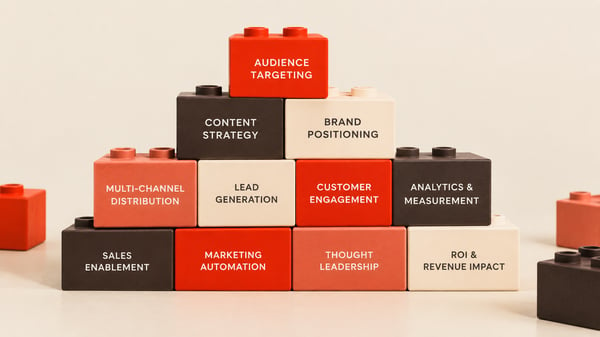
Deploying marketing that positively impacts your brand, pipeline, and revenue requires more than ever before. The days of being able to drive results through a website alone are over. And it’s not enough to do a little of this and a little of that in hopes that something will work.