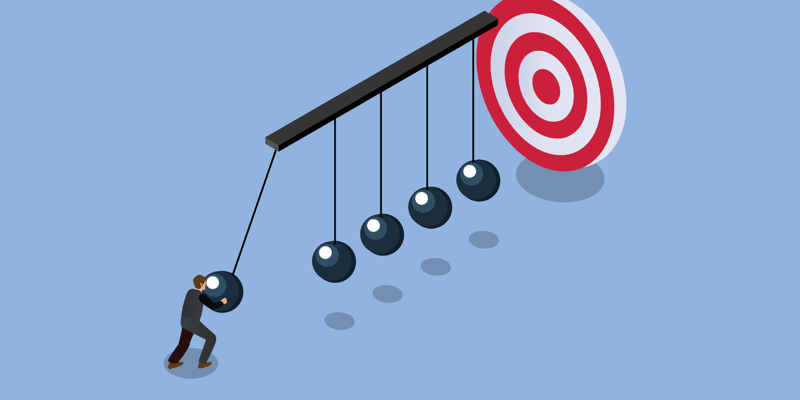
Most people staring at a marketing dashboard want to see leads. Fair enough, that's not the wrong instinct, but it's an incomplete one. At any given moment, only a fraction of your total addressable market is actually shopping for what you sell. The rest aren't ready. They will be, eventually, just not today.
A strategy built only around active buyers is optimizing for the smaller group and ignoring the much larger one that will be ready in three months, six months, a year out. When that larger group finally starts looking, they'll remember whoever showed up first. If that wasn't you, you're starting the sales cycle already behind, and there's no discount for showing up late.
That's the real problem with a demand gen program that has no brand-building complement sitting next to it. It wins today's deals and quietly loses tomorrow's.
Why B2B Brand Strategy Matters More Than Most Marketing Plans Admit
B2B purchases don't happen often. A company might buy a new CRM once every five years, switch agencies every few years, evaluate a new software category maybe once. Because the purchase is rare, the buyer spends nearly all of their time not shopping.
Which means a demand gen program aimed only at in-market buyers is fishing in a small pond. The bigger opportunity is sitting with the buyers who aren't searching, comparing, or booking demos yet - but will be.
A B2B brand strategy exists for that larger group. Its job isn't to produce a lead today. Its job is to make sure that when the buyer starts searching six months from now, your name is already sitting in their head, unprompted.
The Difference Between Demand Capture and Demand Creation
Performance marketing and lead gen capture demand that already exists. Someone searches, sees your ad, converts. Measurable, fast, necessary.
Brand marketing works a little differently, and slower. It creates demand that doesn't yet exist by building familiarity and trust before the buyer starts looking. It won't show up in this month's pipeline report, which is exactly why it keeps getting deprioritized. But skip it, and your demand capture program is competing against rivals who've spent months building recognition with that same buyer while you were busy hitting this quarter's number.
A balanced mix needs both sides. Demand capture: paid search, retargeting, sales outreach to in-market accounts. Demand creation: thought leadership, owned content, PR, a social presence that doesn't go quiet for months at a stretch.
How to Build Ongoing Brand Presence Without a Bigger Budget
You don't need a bigger media budget to stay visible to future buyers, but do need consistency on the channels you already have (and already pay nothing extra to use).
Use Owned Channels as Your Foundation
Your website and your social accounts are free to publish on, so use them. A blog post, a LinkedIn update, a company announcement all do the same job - they remind the market you exist and that you understand their world, not just your own product.
Build a Content Calendar You Can Sustain
A calendar turns posting from ad hoc into a system, and it doesn't need to be elaborate. It needs to run every month without fail, so your presence in the market never goes dark.
Pull Thought Leadership From Internal Experts
Your best content source may be sitting right next to you. The subject matter experts inside your company have opinions, war stories, and technical knowledge that no generic marketing copy is going to fake. So interview them and turn what they say into blog posts, LinkedIn content, PR commentary, whatever fits.
This also solves a real SEO and AEO problem, if you think about it. When a buyer searches for answers in your category, expert-driven content is what ranks and what gets cited in AI-generated answers.
What to Say When You're Not Selling
The mistake most B2B companies make in this phase is talking about their product anyway. Pitch at the end of every piece and the buyer tunes out immediately, because they're not shopping yet and they know a pitch when they see one.
Content for future buyers should be about their problems, not your solution. Talk about what honestly keeps them up at night. Give them something worth reading even though they have no intention of acting on it today. Be the authority on the problem, not just another vendor selling.
None of this works without something distinctive to say. A specific, ownable point of view will stick. The goal isn't to be recognized as a category, it's to be remembered as an idea.
Why This Pays Off Later
The payoff shows up months after you publish. When the buyer finally starts their search, they skip past awareness and education because you already handed that to them for free. They go straight to evaluation, and your name's already on the shortlist, sometimes the only name they can recall without looking it up.
Compare that to the competitor who never showed up until the buyer started actively searching. That competitor is starting from zero and you're starting from familiarity. Being remembered before the buying window even opens is basically the whole advantage.
|
Marketing Approach |
Target Audience |
Primary Goal |
Typical Channels |
|
Demand Capture |
In-market buyers |
Convert active intent |
Paid search, retargeting, sales outreach |
|
Demand Creation / Brand |
Future buyers |
Build memory and trust |
Owned content, thought leadership, PR, social |
No universal ratio here, but the mistake most B2B companies make is dumping nearly everything into demand gen and treating brand as whatever's left over. If your buying cycle is long or infrequent, brand deserves a real line item, not the leftovers.
Track the indirect signals: branded search volume, direct traffic, content engagement, and the self-reported "how did you hear about us" on inbound leads. These move slower than lead gen numbers. That's expected, not a failure.
Content about their problems and pain points, with no pitch attached. Thought leadership from your own people, opinion-driven posts, PR commentary, all of it works because it builds authority without asking for anything back.