



No blog posts match your filters.
How to Build a B2B Content Marketing Strategy That Converts
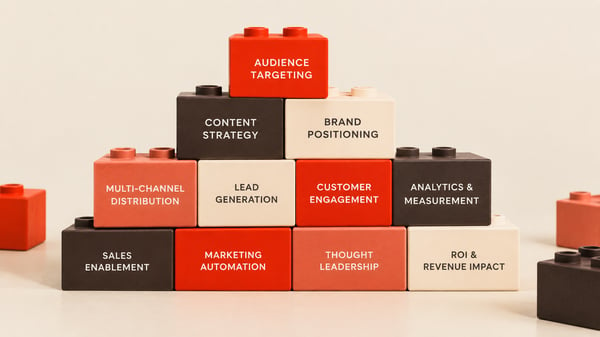
Most B2B content problems arise from strategy gaps. A company can publish consistently, rank for a few keywords, fill a resource center, and still struggle to generate meaningful engagement or pipeline. The content may be accurate. It may even be compelling. But if it's not connected to a specific audience, business challenge, buying stage, promotional plan, and next step, it's unlikely to convert. A content marketing strategy should help the company decide what assets to create and what job those assets are being “hired” to do. Determining why each matters, how people will find them, and what should happen after they engage is a much more useful framework than simply committing to writing multiple blogs a month. Start With the Growth Problem, Not the Editorial Calendar Before brainstorming topics, get clear on what the business needs content to accomplish. Common “jobs” or goals for content to fulfill include: Creating demand in a new market or category Supporting an existing paid media or ABM program Improving organic visibility for high-intent problems Helping buyers understand a complex solution Equipping sales to handle recurring objections Moving known prospects toward a conversation Building credibility in a market where the company is not yet well known Improving conversion on service, solution, or product pages The job you need done shapes the content. A strategy built to educate an emerging market will look different from one designed to convert buyers already comparing vendors. Trying to make every asset serve every stage usually produces content that's too broad to be useful. 1. Define the Audience at the Level Content Requires An Ideal Customer Profile (ICP) tells you which companies to pursue. A B2B content strategy needs more detail. For each priority audience, document the roles involved in the decision, the business pressures they face, the questions they ask, the risks they're trying to avoid, and the outcomes they're accountable for. Then separate what the economic buyer needs from what the day-to-day user, technical evaluator, or internal champion needs. Skip the 40-page persona deck. A practical audience brief can fit on one page if it gives writers and campaign teams enough direction to make effective creative choices. 2. Build the Strategy Around Buyer Questions and Decision Friction Topic generation often starts with what the company wants to say. High-performing content starts with what the buyer is trying to figure out. Collect questions from sales calls, discovery notes, customer success conversations, search data, support tickets, win-loss interviews, and subject-matter experts. Look for patterns such as: Why should we change the way we do this now? What is the cost or risk of leaving the problem alone? What approach is right for a company like ours? What should we have in place before we begin? How is this different from the alternatives? What will implementation require? How do we prove value internally? These questions reveal where buyers hesitate. Content should reduce that hesitation, not simply describe the company's capabilities. 3. Map Content to a Real Buying Path The traditional awareness-consideration-decision funnel is useful, but it can be too generic on its own. B2B buyers move forward by completing specific decision tasks. A more practical content map may include: Problem recognition: helping the audience name the issue and understand its impact Approach evaluation: comparing possible ways to solve the problem Internal alignment: giving champions language, data, and tools to build support Vendor evaluation: answering questions about fit, proof, process, risk, and differentiation Implementation confidence: showing how the work gets done and what success requires For each stage, identify the buyer question, the most useful content format, the best distribution channel, and the next action you want the reader to take. 4. Choose a Small Number of Strategic Content Pillars Content pillars should reflect the overlap between buyer demand, company expertise, and commercial relevance. They should be broad enough to support multiple assets, but specific enough to create a recognizable point of view. A useful pillar typically has: A clear connection to a priority service, solution, or market Enough buyer interest to sustain several angles Subject-matter expertise the company can credibly own A path from educational content to a relevant offer or sales conversation Room for original insight, customer evidence, or proprietary data Three to five well-supported pillars are usually more effective than a long list of unrelated topics. Focus creates depth, stronger internal linking, better reuse, and a clearer market position. 5. Design the Conversion Path Before Creating the Asset Avoid dead ends. Your content assets should end with a specific next step tailored to your goal. The conversion path needs to match the reader's level of intent and the problem the content addresses. Possible conversion paths include: Read a related article or customer story Use a checklist, calculator, template, or diagnostic Register for a working session or webinar Take an assessment and receive a benchmark or recommendation Request a focused consultation Start a broader GTM, marketing, RevOps, or data conversation Build that path into the brief. The writer should know the intended CTA, the landing page, and what happens after conversion before the first draft begins. 6. Treat Distribution as Part of the Strategy Publishing is not distribution. A strong asset needs a plan for how it will reach the right people more than once. Distribution may include organic search, LinkedIn, paid social, programmatic display, retargeting, email nurture, sales sequences, partner channels, webinars, events, and direct account outreach. One core asset can support several of these channels when it's planned for reuse. For example, a benchmark report can become an executive summary, several social posts, a webinar, sales talking points, email nurture content, retargeting ads, and follow-up material for active opportunities. That's a content system. Posting or emailing a PDF once is a dead end. 7. Give Sales a Role Before Launch Sales should not encounter the content for the first time after it's published. Bring sales into the process early enough to validate the questions, objections, and target account situations the asset is meant to address. Then make the finished content easy to use. Provide a short summary, the best-fit audience, suggested outreach language, common triggers, and guidance on where the asset fits in an active deal. Sales enablement is part of content performance, not a separate afterthought. 8. Build a Repeatable Production Process Content quality drops when every asset follows a different process. A practical operating model should define: Who owns the strategy and editorial calendar How topics are selected and prioritized What source material and SME input are required Who validates technical accuracy How many review rounds are allowed Who has final approval How design, web production, tracking, and promotion are handled How performance insights feed the next planning cycle A clear process protects the work from endless committee edits and makes it easier to publish with a consistent point of view. 9. Measure Whether Content Is Helping Buyers Move Pageviews and downloads have value, but they don't tell the whole story. Measurement should reflect the role the content was built to play. Depending on the goal, useful signals could include: Organic visibility for priority topics Engagement from target accounts or roles CTA click-through and landing-page conversion Known-contact progression through nurture Sales use and influence on active opportunities Meetings, qualified pipeline, and revenue associated with content engagement Improvement in conversion on related service or solution pages Content rarely deserves full credit for a complex B2B sale. It should still be possible to show whether the work is attracting the right audience, reducing friction, and contributing to movement. A Simple B2B Content Strategy Framework For each major content initiative, document these eight elements: Business goal Priority audience and buying group Buyer problem or decision question Strategic content pillar Asset and supporting formats Distribution plan Conversion path and CTA Success measures and review cadence That one-page framework is enough to expose weak ideas early. If the audience, buyer question, distribution plan, or next step is vague, the asset isn't ready for production. The Best Content Strategy Creates Fewer Disconnected Assets A B2B content marketing strategy that converts begins with sharper choices. The company decides which audiences matter, what problems it can credibly help solve, where buyers need support, and how content will connect to campaigns, sales activity, and measurable next steps. Once those decisions are in place, the editorial calendar becomes much easier to build and far more likely to contribute to growth. Frequently Asked Questions What is a B2B content marketing strategy? A B2B content marketing strategy is a plan that connects content to a specific business goal, audience, buying stage, and next step. It decides what content gets created and why, instead of just filling an editorial calendar. How many content pillars should a B2B company have? Three to five is usually the right range. Each pillar should connect to a priority service or market, hold enough buyer interest to support multiple assets, and give the company room to show original insight. What's the difference between a content strategy and an editorial calendar? An editorial calendar is a publishing schedule. A content strategy comes first: it defines the audience, buyer questions, pillars, distribution plan, and conversion path that the calendar should be built around. How do you measure content marketing ROI in B2B? Look past pageviews and downloads. Track organic visibility for priority topics, engagement from target accounts, CTA conversion, nurture progression, sales use, and pipeline or revenue influenced by content.

AI Readiness: What Most B2B Companies Are Missing in 2026
Most B2B companies have already "adopted" AI. Someone on the sales team uses a writing assistant. Marketing tried an AI tool for ad copy. Leadership signed off on a pilot. And yet, when you ask what changed in revenue, pipeline, or cost, the answer is usually a shrug. That shrug is the AI readiness gap. It is the distance between having access to AI and being able to use it in a way that moves the business. The gap is not a technology problem. The tools work. The gap sits underneath the tools, in the data, the processes, and the people that AI depends on. This article explains what AI readiness actually means, why most companies are missing it, how to assess it, and what to do about it. What Is AI Readiness? AI readiness is how prepared a company is to put AI to work on real business problems and get measurable results. It covers five things: your data, your processes, your people, your use cases, and your governance. A company with high AI readiness can pick a problem, apply AI to it, measure the outcome, and repeat that cycle. A company with low AI readiness can buy the same tools and get very little from them. Here is a simple test. If you turned on a capable AI system tomorrow and pointed it at your CRM, would it find clean, complete, trustworthy data? Would it know which process it was supposed to improve? Would your team know how to use it, and would anyone own the result? If the answer to any of those is no, you have a readiness gap. AI readiness and AI adoption are not the same thing. Adoption is whether people are using AI. Readiness is whether the company can get value from it. You can have high adoption and low readiness. In fact, that is the most common state we see in B2B companies today. Why the AI Readiness Gap Exists The gap exists because most companies approached AI backwards. They started with the tool and worked toward the problem. The better order is to start with the problem, check the foundation, and then choose the tool. There are a few reasons this happens. AI vendors sell the outcome, not the prerequisites. A demo shows the finished result. It does not show the six months of data cleanup that made the demo possible. Leaders feel pressure to act. Boards and peers are talking about AI. Buying something feels like progress. Fixing your data model does not make a good headline. AI hides problems until it doesn't. A large language model will happily produce a confident answer from bad data. The output looks polished. The mistake only shows up later, in a lost deal or a bad forecast. And finally, AI work usually has no owner. It lands somewhere between IT, marketing, sales, and operations. When everyone owns it, no one does. What Most B2B Companies Are Missing Clean, Connected Data AI is only as good as what it can read. In most B2B companies, the CRM has duplicate contacts, empty fields, stale deal stages, and company records that do not match the billing system. Marketing data lives in one platform, sales data in another, and customer data in a third. An AI system pointed at this data will produce confident nonsense. Data readiness comes first. That means agreed definitions for key fields, a single source of truth for accounts and contacts, and basic hygiene rules that people actually follow. Documented Processes AI is good at doing a defined task faster. It is bad at guessing what the task should be. If your lead handoff, your qualification steps, or your renewal process only exist in someone's head, AI cannot improve them. The companies that get value from AI usually have their core revenue processes written down, even simply. That gives AI something to automate and gives people a way to check its work. A Clear Owner and a Clear Use Case "Use AI" is not a goal. "Cut the time it takes to research an account before a first call from 45 minutes to 10" is a goal. It has a number, a process, and an obvious owner. Most stalled AI efforts never got this specific. They were pilots without a problem. Pick one use case that ties to revenue or cost, name the person accountable for it, and define what success looks like before you start. Team Skills and Trust Giving people access to an AI tool is not the same as training them. Sellers and marketers need to know what the tool is good at, where it fails, how to check its output, and when not to use it at all. Trust matters just as much. If reps believe AI-generated research is unreliable, they will ignore it, and the investment is wasted. Training builds both the skill and the trust. A Way to Measure Results If you cannot measure the before and after, you cannot know whether AI helped. Yet many companies launch AI without a baseline. They never recorded how long the task took, how many leads converted, or what the error rate was before AI got involved. Set the baseline first. Then measure the same thing after. This is the only way to build a case for the next investment, and the only way to catch a change that quietly made things worse. The AI Maturity Model: Where Does Your Company Sit? An AI maturity model is a simple way to see where you are and what comes next. Most B2B companies fall into one of five stages. Stage What It Looks Like What Is Usually Missing 1. Experimenting Individuals use AI tools on their own. No company plan. Owner, use case, guidelines 2. Piloting One or two team pilots. Some excitement, unclear results. Baseline metrics, clean data 3. Operational AI is built into at least one documented process with a measured result. Scale beyond one team 4. Integrated AI runs across sales, marketing, and operations on shared data. Governance, ongoing training 5. Optimized AI outcomes are reviewed and improved on a regular cycle. Rare in B2B today Most B2B companies sit in stage 1 or 2 and believe they are in stage 3. That belief is the readiness gap in a single sentence. The goal is not to jump to stage 5. The goal is to get to stage 3 honestly, with one process, one owner, and one measured result. Everything after that is repetition. How Consultants Assess AI Readiness An AI readiness assessment is a structured review of whether a company can get value from AI. A good one looks at the foundation, not the tools. Here is what a consultant will typically examine. Data. How complete and consistent is the data AI would rely on? Where does it live? Who owns it? Can systems talk to each other, or is everything exported to spreadsheets? Process. Which revenue processes are documented? Which are repeatable? Where does time get wasted on manual work that follows clear rules? People. What is the current skill level with AI tools across sales and marketing? Who is already using them well? Where is there resistance, and why? Use cases. Which problems, if solved, would move revenue or cost the most? Which of those are realistic given the data and process gaps found above? Governance. Are there rules for what data can go into AI tools? Who approves new tools? How is output checked before it reaches a customer? The output of an assessment is not a list of software to buy. It is a ranked list of gaps, a short list of use cases that are ready now, and a plan to close the gaps that block the rest. If an assessment ends with a product recommendation and nothing else, it was a sales call. How to Be AI Ready: A Practical AI Implementation Strategy You do not need a large transformation program to close the AI readiness gap. You need a sequence. Here is the one that works in most B2B companies. Start with one use case that touches revenue. Account research before outreach, lead scoring, meeting prep, proposal drafting, or pipeline hygiene are common places to begin. Pick the one where the pain is obvious and the process is already fairly clear. Fix only the data that use case needs. Do not try to clean the entire CRM. Clean the fields and records that the first use case depends on. This keeps the project small and shows results faster. Write the process down. Even a one-page description of the current steps is enough. It tells the AI what to do and tells the team how to check it. Set the baseline. Record how long the task takes today, how often it gets done, and how good the output is. Without this, you cannot prove anything worked. Train the people who will use it. Short, practical sessions focused on the actual task beat general AI training. Show what good looks like, show what failure looks like, and give people a way to flag problems. Measure, then repeat. Compare results to the baseline after 30 to 60 days. If it worked, pick the next use case and reuse everything you built. If it did not, the assessment usually reveals a gap in one of the five areas above. This is a full AI implementation strategy in six steps. It is boring on purpose. The companies that are winning with AI are not doing anything exotic. They are doing the fundamentals in the right order. Frequently Asked Questions What is AI readiness? AI readiness is a company's ability to use AI to solve real business problems and measure the result. It depends on five things: clean data, documented processes, trained people, clear use cases, and basic governance. It is different from AI adoption, which only measures whether people are using AI tools. How do consultants assess AI readiness in businesses? Consultants run an AI readiness assessment that reviews data quality, process documentation, team skills, candidate use cases, and governance rules. The output is a ranked list of gaps and a short list of use cases the company can act on right away. A good assessment focuses on the foundation, not on which software to buy. How to be AI ready? Pick one revenue-related use case, fix only the data it needs, document the process, set a baseline metric, train the people involved, and measure the result after 30 to 60 days. Then repeat with the next use case. Readiness is built one working process at a time, not through a company-wide rollout. What is the difference between AI readiness and AI adoption? Adoption measures usage. Readiness measures the ability to get value. Many B2B companies have high adoption and low readiness: lots of people using AI tools, very little change in revenue, cost, or speed. Does a small B2B company need an AI maturity model? Yes, but a simple one. Knowing whether you are experimenting, piloting, or operational tells you what to work on next. Most small and mid-sized companies are at stage 1 or 2 and should focus on reaching stage 3 with a single measured use case.

CRM Integration: Your Tech Stack Should Talk, Not Argue
CRM integration services connect your CRM to the other systems your business runs on. That usually means your ERP, your marketing platform, your support desk, and your data warehouse. Most companies treat this as a technical task. Find the connector, map the fields, turn the sync on, and move on. That part is genuinely easy now. The harder work starts right after, when you have to decide how these systems should actually behave together. A strong CRM integration starts with the business process, not the API. Connecting systems is simple. Agreeing on which system owns each piece of data, when information should move, and what happens when something breaks is the real work. Skip that step and you end up with a stack that's technically connected and still causes chaos. What Do CRM Integration Services Actually Cover? Companies buy specialized systems for good reasons. Each one is built to do a specific job well. System Job CRM Manages customer relationships and the revenue process ERP Manages orders, financial transactions, inventory, and operations Marketing platform Manages campaigns and engagement Support platform Manages service interactions Data platform Pulls information together for analytics and reporting Problems start when a company expects every platform to know and control everything. Each system should keep doing the job it was built for. Good CRM integration services make sure the right information reaches the right people, without turning the CRM into the ERP or the ERP into the CRM. Who Should Own Each Piece of Data? Most integration projects start with field mapping. CRM company name maps to ERP customer name. CRM product maps to ERP item. CRM address maps to ERP address. That work matters, but it comes second. The first question is simpler and harder: which system owns this piece of information? If two systems can both change a field, you need an answer before you turn anything on. If sales updates an address in the CRM while finance updates it in the ERP, which value wins? If the ERP puts an account on credit hold, should a rep be able to override that in the CRM? If a product gets discontinued in the ERP, should the CRM still let someone sell it? These are business rules. They come from the people running the process, not from the API documentation. Before you touch the integration, write down where each piece of information starts, which system owns it, which systems need to see it, who can change it, which direction it moves, and what happens when two systems disagree. Does Seeing the Data Mean Owning It? No. This is one of the easiest ideas to understand and one of the most commonly missed. A salesperson often needs to see order history, invoice status, an outstanding balance, shipping status, product availability, or a customer's credit standing. None of that means the CRM should own those values. The ERP can stay the source of truth while the CRM just displays what the rep needs. The same goes the other way. Finance might need visibility into a closed deal, contract terms, or the account owner. People can see what they need without every system taking on responsibility for maintaining it. Should Everything Sync Both Ways? Not by default. There's often an assumption that a mature integration means every field flows both directions. That assumption creates most of the pain teams feel from CRM integrations. If system A and system B can both change the same information, the integration has to handle a list of edge cases. Which update happened first? Which system has priority? Should one update overwrite the other? What happens when both change within the same second? How do deletions work? How do failed updates get handled? How do you stop an update loop? Bidirectional sync should be a decision your team makes on purpose, not a default setting. Ask what business process actually requires both systems to author the same value. If nobody has a good answer, let one system own it and move on. How Should Integration Work Around Business Events? Fields aren't the most useful place to start planning. Business events are. A lead gets qualified. An opportunity closes. A customer gets approved. An order gets created. An invoice posts. A payment goes overdue. A subscription renews. A customer cancels. Each of these events should trigger specific integration behavior. “Sync opportunities to NetSuite” isn't a real requirement. A real requirement looks more like this: when an opportunity reaches closed won, check that the required fields are filled in. Once that's confirmed, create or update the customer and the order in the ERP. Send the ERP identifiers and order status back to the CRM. That version supports an actual business process instead of a generic data feed. Should a Human Stay in the Loop? Often, yes. Companies tend to assume the goal of integration is full automation. The better goal is the right level of automation, matched to how much risk sits in each step. Picture a closed deal about to become an order in the ERP. There's pricing, product details, terms, shipping information, billing details, and contract requirements to check. Instead of pushing that deal straight into the ERP, finance or order management often needs a final look. The CRM can support a clear control point: closed won, then review, then ready for ERP, then order created. That reviewer isn't a flaw in the automation. That person is part of the design. Automate the repetitive work. Keep human judgment where it lowers risk or adds real value. What Should the Integration Architecture Follow? Most integration diagrams show application boxes connected by arrows. A more useful starting point is the customer journey itself. A lead comes in. Marketing engages them. Sales qualifies them. An opportunity gets created. The deal closes. An order gets created. The product or service gets delivered. An invoice goes out. Payment comes in. The customer gets support. A renewal or expansion happens later. At each stage, ask which system participates, what information gets created, where that information should live, what event moves the process forward, and what the next team needs to see. The architecture should support that journey. The journey shouldn't have to bend around the architecture. What Happens When Integrations Fail? They will. That's the honest starting point. An API times out. A required field goes missing. A product ID doesn't match. The customer already exists somewhere else in the system. Someone enters a bad value. Authentication expires. The ERP rejects the transaction. None of this is rare. Every integration hits these problems eventually. The real question is what happens next. A solid integration defines how failures get caught, who gets notified, whether the transaction retries on its own, where someone can actually see the error, whether it's safe to replay the transaction, how duplicates get prevented, and how the two systems get reconciled afterward. If your failure process is someone eventually noticing the numbers don't match, the integration isn't finished yet. Why Does Identity Matter in CRM Integration? Different systems often name the same customer differently. The CRM might say ABC Manufacturing. The ERP might say ABC Manufacturing LLC. Marketing might have it as ABC Mfg. The data warehouse might end up holding all three versions at once. Field mapping can't fix that on its own. A working integration needs persistent identifiers: CRM record IDs, ERP customer IDs, external identifiers where they apply, internal master IDs, product IDs, order IDs, and contract IDs. The integration needs a reliable way to know that two records point to the same real customer, product, or transaction, even when the text doesn't match exactly. This gets harder, not easier, as you connect more systems. Should Your CRM Hold Everything? No. Sales shouldn't have to log into six systems to understand what's happening with one customer. That doesn't mean copying six databases into the CRM either. A better setup makes the CRM the place your customer facing team actually works. Relevant ERP details show up when needed. Actions in the CRM can kick off workflows in other systems. Support context stays visible. Marketing engagement adds context. Data platforms feed in insights where useful. The CRM becomes the operating surface for the people who need it, while every other system keeps doing the specialized job it was built for. How Does AI Change the Integration Problem? Integrations used to connect application A to application B and stop there. Now there's a third participant showing up in the architecture: AI. AI assistants and agents may need to pull customer context, analyze information, recommend next steps, or take approved actions across your business systems. Protocols like MCP give AI a defined way to reach approved tools and data. That raises the stakes on your integration architecture instead of lowering them. If the CRM and ERP disagree about a customer, which one should the AI trust? If three systems list three different addresses, which one does the agent use? If AI wants to take an action, which system should actually receive it? AI shouldn't be left to guess your system of record strategy. That strategy has to exist before AI gets involved. The Brickwork Integration Framework Before connecting two systems, work through seven questions. # Question What It Answers 1 Process What business process are we actually enabling? 2 Event What event should trigger information to move? 3 Ownership Which system owns each important piece of data? 4 Direction Which way should that information flow? 5 Identity How do we know a record in one system matches a record in another? 6 Control Where does this need validation, approval, or a human decision? 7 Recovery What happens when this step fails? Answer these before the technical build starts. The build gets easier once the business decisions are already made. What's the Real Goal of CRM Integration Services? A connected tech stack and an integrated one aren't the same thing. Systems can exchange data all day and still create chaos for the people using them. Good CRM integration services aim for something more specific than connecting everything. The goal is a revenue system that runs as one coordinated process, with each platform still doing the job it was built to do. The best integration sometimes moves less data, not more. It might use fewer bidirectional fields. It might build in a human approval step. It might deliberately leave some information sitting in another system on purpose. That's better architecture. Your systems don't all need to do the same job. They need to know when to talk to each other, what to say, and who gets the final word. Frequently Asked Questions What is CRM integration? CRM integration connects your CRM to other business systems, like an ERP, marketing platform, or support desk, so information moves between them automatically. Good integration also defines which system owns each piece of data and what happens when systems disagree, not just how the data moves. Why do CRM integrations fail? Most CRM integrations fail because teams map fields before agreeing on data ownership. Without clear rules for who owns what, systems overwrite each other, sync loops start, and nobody trusts the numbers. Fixing ownership first prevents most of these failures. Should CRM integration always be bidirectional? No. Bidirectional sync should be a deliberate choice, not a default. Only make a field bidirectional when a real business process needs both systems to update it. Otherwise, pick one owner and keep the sync one directional. Where should a CRM integration project start? A CRM integration project should start with the business process, not the technology. Map out which events should move information, who owns each data point, and what happens when something fails, before choosing tools or building connectors. How does AI affect CRM integration? AI tools and agents now need reliable data to act on, which raises the stakes on integration architecture. If your systems disagree on basic facts like a customer's address, an AI agent has no reliable source to trust, so ownership rules matter even more. How is Brickwork's approach to CRM integration different? Brickwork starts with business ownership and process design before touching any connector or API. That approach usually means less bidirectional syncing, more deliberate human checkpoints, and an integration that supports how the business actually works.

HubSpot Optimization Consulting Services: A Practical Guide
Most companies buy HubSpot expecting one connected system for marketing, sales, and service. A few months in, they are using a small slice of what they pay for. The usual explanation is a training problem. Someone assumes the team needs another session or a better cheat sheet. That is rarely the real issue. The real issue is a portal that got built once, early, and never touched again while the business kept changing. HubSpot optimization consulting services exist to close that gap. An optimization engagement audits what your team actually uses, flags what is broken or ignored, and rebuilds the pieces that are quietly costing you time or trust in your own data. This guide covers where HubSpot portals break down most often, the tier mistakes that waste real budget, and the one architecture decision that fixes more reporting problems than anything else. What Are HubSpot Optimization Consulting Services? HubSpot optimization means reviewing a portal that is already live and fixing the setup so it matches how the business runs today. That covers pipelines, properties, workflows, and reports. It has nothing to do with the platform itself. The platform is fine. The configuration is usually the problem. HubSpot Optimization vs Onboarding Onboarding happens once, at the start, when a company first sets up HubSpot. It gets the basic pipelines built, the team logged in, and the core properties in place. Optimization happens later. The business has grown, changed its sales process, added a product line, or just drifted away from the original setup. Nobody planned for that drift. It happens anyway. Why Most HubSpot Portals Underperform Pipelines, properties, and workflows almost always get built early and fast, usually in the first few weeks after signing the contract. They rarely get revisited after that. Then the business changes. New sales process. New product line. New team structure. The portal stays exactly where it was on day one. The result shows up everywhere. Reports stop matching what sales actually closed. Reps stop trusting the numbers. People quietly move their real tracking into a spreadsheet, and the CRM turns into a place data goes to die. If you are looking for how to get more value from HubSpot, this is where to start. Not a new feature. A hard look at what you already built. Two HubSpot Limitations That Catch Even Experienced Admins The Meeting Logging Interface Has a Hard Limit HubSpot's native meeting-logging screen cannot take custom fields. If your team needs richer detail on a meeting, there is no way to add that field to the logging interface itself. The workaround is automation layered on top of the meeting object, not an attempt to customize the logging UI. Teams that try to force custom fields into that screen lose time discovering it simply cannot be done. Workflow Status Is Not Filterable in Standard Reports HubSpot's custom report builder will not let you filter directly by workflow enrollment status. That trips up a lot of admins who assume it should, since almost everything else in the portal is filterable. The practical fix is Lists. Build a list based on workflow membership, then report off the list instead of the workflow itself. This is not an edge case. It shows up in nearly every mature HubSpot portal we review. Tier Mismatches Are a Common and Expensive Mistake Some of HubSpot's automation and reporting capabilities only exist in Operations Hub Professional and above. Building a workflow that assumes those features exist, on a portal sitting at a lower tier, is one of the most common mistakes we see, and one of the most expensive. Part of a real optimization review is mapping what your current subscription tier actually supports before anyone designs new automation. An upgrade, say from Marketing Hub Professional to Enterprise, unlocks real reporting and personalization value in some situations. In others, it changes almost nothing. The review should tell you which one you are looking at before you spend the money. That distinction is where increasing HubSpot ROI actually starts. Feature Need Minimum Tier Typically Required Common Mistake Advanced workflow branching and calculated properties Operations Hub Professional Building automation that assumes this exists on Starter or Free Reports filtered by workflow enrollment status Any tier, using the Lists workaround Trying to filter directly inside the report builder Advanced personalization and attribution reporting Marketing Hub Enterprise Upgrading before confirming the use case actually needs it The Most Overlooked Lever: Contact-Level Architecture The biggest optimization win we see rarely comes from a new integration or a flashy dashboard. It comes from the contact record. Use the contact record, not the deal record, as the anchor for lifecycle and SLA tracking. Layer in custom timestamp properties, things like first contacted date, first response date, and stage entry dates. Build IF/THEN branching for tiered logic, so an enterprise lead and a small business lead can follow different SLA rules inside the same portal. Contact records get touched earlier and more often across the lifecycle than deal records do. That makes them cleaner and more consistent as a data source. Trying to patch reporting reliability at the deal or pipeline level after the fact means fixing symptoms instead of the actual source. This single shift is at the center of most HubSpot RevOps optimization work worth doing. Scaling Optimization Across Multiple Portals Agencies, franchises, and multi-brand companies often run several HubSpot portals at once. A canonical report or dashboard can be copied structurally from a master portal to each client or child portal. That only works as a one-time template push if the receiving portal already has the same underlying custom properties built. Skip that step and the copied dashboard either breaks outright or quietly shows blank data, which is worse, because nobody notices until a report gets pulled for a client meeting. What a HubSpot Audit Service Actually Covers A full review of pipelines, properties, and workflows against how the business runs right now, not how it ran when the portal was first built A tier check comparing what the current subscription actually supports against what the team is trying to build A review of contact-level architecture, lifecycle stages, and SLA tracking Specific fixes for known platform limits, including where Lists need to stand in for native reporting gaps Frequently Asked Questions What does HubSpot optimization mean? HubSpot optimization means reviewing an existing portal and fixing the setup so it matches the business today. It covers pipelines, properties, workflows, and reporting. It is not about the platform itself. How is HubSpot optimization different from onboarding? Onboarding happens once, when a company first sets up HubSpot. Optimization happens later, after the business has grown or changed and the original setup has fallen behind. How do I know if my portal needs an optimization review? Common signs include reps who do not trust the reports, numbers that do not match what actually closed, and workflows nobody remembers building. A team quietly running its real tracking in a spreadsheet is another clear sign. Does working with a HubSpot Diamond partner matter for this kind of work? A Diamond-tier partner has worked across enough portals to already know where the platform's real limits sit, like the meeting logging fields or the workflow reporting gap, and where they do not. That experience shortens the audit. How long does a HubSpot optimization engagement usually take? It depends on the size of the portal and how many workflows and pipelines are already in use. Most engagements start with an audit, then move into rebuilding the highest-impact pieces first rather than fixing everything at once.

CRM Data Quality: Stop Cleaning Up the Same Mess
People keep asking the same thing about their CRM. Why does the data go bad again a few months after every cleanup? The answer is usually simple. A cleanup fixes today's mess. It does nothing to stop the mess from coming back. Most CRM data quality problems are not solved by cleaning the data. They are solved by fixing how the data gets created, owned, and maintained in the first place. Clean once and you fix today. Build a system and you fix it for good. The rest of this article is the how. Required Fields at the Wrong Time Create Misleading Data Before you make a CRM field required, ask a simple question. At what point in the sales process is the information realistically known? A field that is required at the wrong time does not necessarily create better data. It can create misleading data because the user selects something simply to move forward. The goal should not be getting people to enter more data. The goal should be requiring humans to enter only the data that requires human knowledge or judgment. Every Important CRM Field Needs a Reason to Exist Companies accumulate CRM fields over time. Someone needed a field for a report three years ago. Marketing added another field for a campaign. Sales Operations added several more. Finance needed something for an integration. Eventually there are hundreds of properties and nobody knows which ones matter. Every important CRM field should answer basic questions: Why do we collect this? What business process does it support? Who or what creates the value? At what point should the value become known? Who owns it? Which system is authoritative for it? Can a user change it? Does it drive a workflow, report, integration, segmentation, or decision? What happens when it becomes outdated? If nobody can explain why a field exists, it probably should not be required and may not need to exist at all. Data Quality Starts With the Business Process Instead of beginning with a giant CRM cleanup, start with the important revenue processes. For example: Lead → Qualified Lead → Opportunity → Closed Won → Customer Then look at what information is required at each stage. What should we know when a lead is created? What additional information should be known before qualification? What information is required to create an opportunity? What needs to be validated before Closed Won? What needs to move into an ERP or another downstream system once someone becomes a customer? This changes data quality from an abstract database exercise into something tied directly to how the business operates. Not Every System Should Be Allowed to Change Everything Modern companies have customer information everywhere: CRM, ERP, marketing automation, customer support, billing, product platforms, data warehouses, enrichment providers, and spreadsheets. The problem is not necessarily that the information exists in multiple places. The problem is when nobody has decided which system is allowed to be right. A quick way to see this is to map who owns what. System of Record What It Owns (example) CRM Contacts, account relationships, lead lifecycle, opportunities, and sales activity ERP Orders, invoices, payments, financial status, and products or inventory Other platforms Support tickets, product usage, subscriptions, and marketing engagement That information may need to be visible in the CRM. But visibility is not the same as ownership. This distinction is critical to CRM data quality. Define a System of Record For every important data domain, determine the authoritative system. If an invoice status comes from the ERP, the salesperson may need to see it in the CRM, but the salesperson probably should not manually change it there. If an opportunity stage belongs to the sales process, the ERP should not become the master for that field simply because the information eventually flows there. This is where data quality and integration architecture begin to overlap. You need rules for: Where data originates. Which system owns it. Where it can be viewed. Who can change it. Which direction it flows. What happens when two systems disagree. Without those rules, integrations can actually make data quality worse because bad or conflicting information moves faster. Fix Data at the Point of Creation Companies often spend too much effort fixing bad data downstream. The better strategy is preventing bad data upstream. Examples: Use dropdowns instead of free text when values need to be standardized. Use validation rules when a value must follow a defined format. Use enrichment when the information already exists elsewhere. Use workflows for values that can be calculated or derived. Use matching and duplicate prevention before creating another record. Use integrations when another system already owns the information. Make fields required at the point in the process where the information should actually be known. Remove fields that nobody uses. Good CRM architecture should make the correct behavior easier than the incorrect behavior. Data Quality Is More Than Completeness Companies often measure CRM data quality by asking what percentage of fields are populated. That is useful, but it is not enough. A record can be 100% complete and still be wrong. CRM data quality should consider: Completeness. Is the information there? Accuracy. Is it correct? Consistency. Does the same information mean the same thing across the organization? Timeliness. Is it current? Uniqueness. Are duplicate entities controlled? Ownership. Do we know who or which system is responsible for it? Lineage. Do we know where the information came from? Trust. Will someone actually use this data to make a business decision? That last one is probably the most important measure. If the CRO exports CRM data to Excel every week because they do not trust the dashboard, there is a data quality problem. If Finance and Sales have different revenue numbers, there is a data quality problem. If Marketing and Sales use different definitions of a qualified lead, there is a data quality problem even if every field is populated. Cleaning the CRM Still Matters, But It Comes Later This article should not imply that data cleansing is unnecessary. Duplicates still need to be merged. Values still need to be standardized. Old records still need to be reviewed. Data may need to be enriched. Incorrect associations need to be fixed. But cleanup should happen after the future-state rules are defined. Otherwise, what standard are we cleaning the data against? The better sequence is: Understand the business process. Define what data the process actually needs. Establish ownership and systems of record. Define field and data standards. Automate what should not require human entry. Clean and migrate the existing data. Continuously monitor data quality. This is a much more sustainable approach than "let's clean HubSpot" or "let's clean Salesforce." AI Raises the Stakes Companies are rushing to add AI to CRM: AI assistants, AI agents, lead scoring, automated prospecting, forecasting, next best actions, and automated customer communications. But AI depends on context. If the underlying customer data is duplicated, stale, inconsistent, or incorrectly mastered, AI does not magically fix the problem. It can amplify it. A human salesperson might recognize that "ABC Manufacturing," "ABC Manufacturing LLC," and "ABC Mfg." are probably the same company. An automated process may treat them as three customers unless the underlying identity and data architecture have been resolved. Before asking, "Is our CRM AI ready?" companies should first ask, "Can our own people trust the CRM today?" If the answer is no, AI is not the first problem to solve. The Brickwork Takeaway The goal is not a perfectly clean CRM. That is unrealistic. Businesses change. People change jobs. Companies merge. Systems evolve. New information constantly enters the environment. The goal is to build a self-correcting revenue data system where: Ownership is clear. Important definitions are standardized. Systems of record are established. Humans enter only what requires human judgment. Automation handles what machines can reliably determine. Integrations follow clear ownership rules. Quality is monitored continuously. People trust the information enough to actually use it. CRM data quality should not be treated as a cleanup project. It should be designed into the way the business operates. What is CRM data quality? CRM data quality is how complete, accurate, consistent, current, and trusted your customer data is. It is not just whether fields are filled in. A record can be 100% populated and still be wrong. Real quality means people trust the data enough to make decisions with it. Why does CRM data get bad over time? CRM data decays because companies add fields, processes, and integrations without clear ownership. People leave, companies merge, and systems change. Bad data also enters when required fields ask for information too early, so users enter anything just to move forward. The fix is preventing bad data at the point of creation. What is a system of record? A system of record is the main source for a certain type of data. For example, a CRM may store customer and sales data, while an ERP stores invoice data. Other systems can use or display the data, but changes should be made in the system of record. Seeing the data does not mean a system owns it. How do you improve CRM data quality? Start with the revenue process, not the database. Define what data each stage needs, assign a system of record, and set field standards. Automate what machines can determine and require humans to enter only what needs judgment. Clean and migrate existing data after those rules are set, then monitor quality continuously. Is my CRM ready for AI? Ask a simpler question first. Can your own team trust the CRM today? AI depends on context. If your data is duplicated, stale, or inconsistent, AI does not fix it, it amplifies it. An automated process may treat "ABC Manufacturing" and "ABC Mfg." as two companies. Fix identity and ownership before adding AI. Is a complete CRM record always accurate? No. Completeness only means the fields are filled in. Accuracy, consistency, and timeliness matter just as much. If Finance and Sales report different revenue, or Marketing and Sales define a qualified lead differently, you have a data quality problem even when every field is populated.

How to Build a Marketing Playbook: Turn One Campaign Into a Repeatable Process
A campaign wraps up. Reporting was completed and the numbers look good. The team moves on to the next priority. A few months later, there’s an appetite to run a new campaign. Same personas challenges, similar campaign goals, but nobody remembers exactly how it worked. The key stakeholder has moved to a different project, or left the company. The team starts the process from scratch, again. This is one of the most common gaps in marketing today. Teams get good at running campaigns, but they rarely get good at capturing what worked so it can be repeated. A completed campaign should leave behind more than a result. It should leave behind a system. Why Campaigns Get Lost After They End Most marketing teams treat a campaign like a project with a start date and an end date. Once the deliverables are completed and the report goes out, the campaign is considered finished. But the work that made it successful, the sequencing, the messaging that landed, the audience segments that converted, often lives only in one person's head or scattered across email threads and slide decks. This is not a lack of discipline. It is a structural problem. Campaigns are usually built under deadline pressure, so documentation gets pushed to later, and later rarely comes. The result is a team that keeps reinventing the wheel instead of improving it. What a Repeatable Process Actually Looks Like Turning a campaign into a system starts with a shift in mindset: the campaign is not the finish line, it’s the first draft of a process. We worked with a client who wanted to build a revenue engine from scratch. They wanted a partner to help get it running so their own team could eventually take it over, repeat it, and optimize it without outside help. Instead of treating each initiative as a one off, we built playbooks for the efforts that we felt aligned most with their audience: Association partnership opportunities, based on where their ideal customers were already spending time Pre, during, and post tradeshow planning, so the same event playbook could be reused every time High value webinar session set-ups paired with supporting guides Email nurtures tied directly to reusable content and offer pages Ad campaigns built to drive traffic to reusable interactive content pages We also connected sales workflows using our BDRs directly to hand raisers coming out of these campaigns, so leads showing real interest were primed for a conversation the moment they raised their hand. The common thread across all of it was that each piece was built to be reusable, not just effective once. The Hidden Benefit of Building the Playbook Something interesting happens when you sit down to turn a campaign into a repeatable process. You start noticing the small, but important learnings to repeat or avoid. Maybe a handoff between two team members took longer than it should have. Maybe a piece of content performed well but nobody had a clear owner for updating it. Maybe the targeting worked, but only because someone manually checked it, a step that was never written down anywhere. These are the kinds of gaps that do not show up in a results report, but they show up the moment you try to document the process post-campaign. Building the playbook isn’t just about documentation. It’s a forcing function that improves the next campaign before it even starts. Not Every Client Wants the Same Approach Some clients want something unique every time. They come to us wanting to try a new idea, test a new channel, or build campaigns from a blank page each cycle. That is a valid approach, and it has its place. But for most teams, building the infrastructure for a working system, one that can launch, run, get optimized, and stay fresh with new content, is the more efficient path. It protects budget and internal resources better than reinventing the approach every time. Getting the Agency Relationship Right A repeatable process only works long term if the ownership is clear. Part of building a playbook with a client is deciding what the agency will own and what the client's team will own once the system is running. This depends heavily on the internal team. Some clients want the agency to keep running point on execution indefinitely. Others want to bring it fully in house within a few months and only call on the agency for strategy or troubleshooting. Neither is wrong. What matters is that the split is intentional, not accidental, so nobody is left guessing who is supposed to be doing what. Playbooks Are Not a One Time Document A playbook that never gets updated becomes outdated fast. Markets shift, channels change, and what worked last quarter might underperform this quarter. The recommendation is to review and update a marketing playbook quarterly, timed to line up with performance reviews. That way, whatever was learned in the last few campaigns gets folded directly into the process instead of sitting in someone's notes. Teams that document their strategy in writing are significantly more likely to hit their goals than teams working from an undocumented approach, and staying organized around that documentation has been linked to a dramatically higher chance of a successful marketing initiative. Consistency built through a shared playbook also pays off in trust. A Demand Metric study sponsored by Lucidpress found that organizations struggling with brand consistency estimated an average 23% potential revenue lift from presenting their brands consistently. Seventy-one percent also cited market confusion as the leading consequence of inconsistent brand use. What is a marketing campaign playbook? A marketing campaign playbook is a documented process that captures how a successful campaign was built and run, so it can be repeated, adjusted, and improved without starting from scratch each time. How is a playbook different from a marketing plan? A marketing plan outlines a specific campaign or initiative. A playbook is the reusable reference that shows how similar work gets done consistently, regardless of who is running it. How often should a playbook be updated? Quarterly is a good rhythm for most teams, ideally timed with performance reviews so recent campaign results and lessons get incorporated while they are still fresh.

B2B Brand Strategy: Stay Relevant Before Buyers Are Ready
Most people staring at a marketing dashboard want to see leads. Fair enough, that's not the wrong instinct, but it's an incomplete one. At any given moment, only a fraction of your total addressable market is actually shopping for what you sell. The rest aren't ready. They will be, eventually, just not today. A strategy built only around active buyers is optimizing for the smaller group and ignoring the much larger one that will be ready in three months, six months, a year out. When that larger group finally starts looking, they'll remember whoever showed up first. If that wasn't you, you're starting the sales cycle already behind, and there's no discount for showing up late. That's the real problem with a demand gen program that has no brand-building complement sitting next to it. It wins today's deals and quietly loses tomorrow's. Why B2B Brand Strategy Matters More Than Most Marketing Plans Admit B2B purchases don't happen often. A company might buy a new CRM once every five years, switch agencies every few years, evaluate a new software category maybe once. Because the purchase is rare, the buyer spends nearly all of their time not shopping. Which means a demand gen program aimed only at in-market buyers is fishing in a small pond. The bigger opportunity is sitting with the buyers who aren't searching, comparing, or booking demos yet - but will be. A B2B brand strategy exists for that larger group. Its job isn't to produce a lead today. Its job is to make sure that when the buyer starts searching six months from now, your name is already sitting in their head, unprompted. The Difference Between Demand Capture and Demand Creation Performance marketing and lead gen capture demand that already exists. Someone searches, sees your ad, converts. Measurable, fast, necessary. Brand marketing works a little differently, and slower. It creates demand that doesn't yet exist by building familiarity and trust before the buyer starts looking. It won't show up in this month's pipeline report, which is exactly why it keeps getting deprioritized. But skip it, and your demand capture program is competing against rivals who've spent months building recognition with that same buyer while you were busy hitting this quarter's number. A balanced mix needs both sides. Demand capture: paid search, retargeting, sales outreach to in-market accounts. Demand creation: thought leadership, owned content, PR, a social presence that doesn't go quiet for months at a stretch. How to Build Ongoing Brand Presence Without a Bigger Budget You don't need a bigger media budget to stay visible to future buyers, but do need consistency on the channels you already have (and already pay nothing extra to use). Use Owned Channels as Your Foundation Your website and your social accounts are free to publish on, so use them. A blog post, a LinkedIn update, a company announcement all do the same job - they remind the market you exist and that you understand their world, not just your own product. Build a Content Calendar You Can Sustain A calendar turns posting from ad hoc into a system, and it doesn't need to be elaborate. It needs to run every month without fail, so your presence in the market never goes dark. Pull Thought Leadership From Internal Experts Your best content source may be sitting right next to you. The subject matter experts inside your company have opinions, war stories, and technical knowledge that no generic marketing copy is going to fake. So interview them and turn what they say into blog posts, LinkedIn content, PR commentary, whatever fits. This also solves a real SEO and AEO problem, if you think about it. When a buyer searches for answers in your category, expert-driven content is what ranks and what gets cited in AI-generated answers. What to Say When You're Not Selling The mistake most B2B companies make in this phase is talking about their product anyway. Pitch at the end of every piece and the buyer tunes out immediately, because they're not shopping yet and they know a pitch when they see one. Content for future buyers should be about their problems, not your solution. Talk about what honestly keeps them up at night. Give them something worth reading even though they have no intention of acting on it today. Be the authority on the problem, not just another vendor selling. None of this works without something distinctive to say. A specific, ownable point of view will stick. The goal isn't to be recognized as a category, it's to be remembered as an idea. Why This Pays Off Later The payoff shows up months after you publish. When the buyer finally starts their search, they skip past awareness and education because you already handed that to them for free. They go straight to evaluation, and your name's already on the shortlist, sometimes the only name they can recall without looking it up. Compare that to the competitor who never showed up until the buyer started actively searching. That competitor is starting from zero and you're starting from familiarity. Being remembered before the buying window even opens is basically the whole advantage. Marketing Approach Target Audience Primary Goal Typical Channels Demand Capture In-market buyers Convert active intent Paid search, retargeting, sales outreach Demand Creation / Brand Future buyers Build memory and trust Owned content, thought leadership, PR, social How much of my marketing budget should go toward brand versus demand generation? No universal ratio here, but the mistake most B2B companies make is dumping nearly everything into demand gen and treating brand as whatever's left over. If your buying cycle is long or infrequent, brand deserves a real line item, not the leftovers. How do I measure the ROI of brand-building content if it doesn't generate leads right away? Track the indirect signals: branded search volume, direct traffic, content engagement, and the self-reported "how did you hear about us" on inbound leads. These move slower than lead gen numbers. That's expected, not a failure. What kind of content works best for buyers who aren't ready to purchase? Content about their problems and pain points, with no pitch attached. Thought leadership from your own people, opinion-driven posts, PR commentary, all of it works because it builds authority without asking for anything back.

B2B Sales Outsourcing: The Build-Operate-Transfer Model
Every growing organization eventually hits the same wall: real market demand and not enough dedicated, specialized sales capacity to capture it. That's as true for a private equity firm trying to accelerate a portfolio company's commercial function as it is for a manufacturer entering a new region, a technology company expanding into a new segment, or a healthcare or legal organization that needs sales talent fluent in a highly regulated, trust-driven buying process. Building that capacity from scratch — or bolting a new go-to-market motion onto an existing team — takes months of recruiting, ramp time, and risk that most operating leaders can't absorb while still hitting a growth number. B2B sales outsourcing solves this differently, but only when the partner treats every industry as genuinely different rather than running the same playbook everywhere. Brickwork built its Outsourced Sales Talent practice around four specialized groups so clients get reps and leaders who already understand their market's language, buying cycle, and compliance requirements — combined with a Build-Operate-Transfer model that adapts to how permanent a client wants the relationship to be. This article breaks down what B2B sales outsourcing looks like across these markets, how the Build-Operate-Transfer model works, and how AI-driven insight and specialized talent combine into a real go-to-market engine — not a lead list. Why Scaling a Specialized Sales Team In-House Is Hard — In Any Industry Hiring a sales team from scratch is slower and riskier than most leadership teams expect, and the challenge compounds the more specialized the market. A new BDR or AE typically needs two to three months just to learn the product, the market, and the CRM before they're fully productive — longer when the sale involves regulatory nuance, technical specifications, or a private equity hold-period timeline. Add recruiting time, and a single hire can take a quarter or more to start contributing meaningfully. Lean commercial teams also carry concentrated risk. If a key sales rep or leader leaves, the organization doesn't just lose a person — it loses the messaging, the pipeline knowledge, and the momentum they built. This risk is especially acute for portfolio companies operating against a defined hold period, industrial firms with long, technical sales cycles, and organizations in regulated fields where finding a rep who already understands the compliance landscape can take months on its own. What B2B Sales Outsourcing Actually Means at Brickwork B2B sales outsourcing isn't a call center reading a script, and it isn't a list of leads dropped in an inbox. Done well, it's a fully managed extension of a client's team — BDRs, SDRs, Account Managers, and Account Executives who are recruited, trained, and led by a partner whose entire business is producing sales results. At Brickwork, that team is backed by a leadership group with more than 100 years of combined sales leadership experience. The partner isn't just supplying headcount — it's running the pipeline engine that produces pipeline in the first place: recruiting, onboarding, coaching, messaging, and reporting, all included. The Build-Operate-Transfer Model: Sales Capacity That Matches How You Want to Scale Brickwork's outsourced sales teams run on a Build-Operate-Transfer (BOT) model, which gives clients control over how permanent the arrangement becomes: Build — Brickwork recruits, hires, and stands up a dedicated team — BDRs, SDRs, Account Managers, Account Executives, and sales leadership — mapped to the client's target market, messaging, and ideal customer profile. Operate — Brickwork manages day-to-day performance: coaching, CRM discipline, reporting, and AI-driven insight, so the team performs like a mature in-house function without the client having to build the management layer. Transfer — Whenever it makes sense for the client — after a defined term, a milestone, or an exit event — top-performing team members can transfer onto the client's own payroll, preserving institutional knowledge and pipeline continuity instead of starting over. The model is flexible by design. Some clients stay in Operate indefinitely because it's more efficient than building the function themselves. Others use it as a bridge to a fully in-house team. Private equity operating partners often use it to stand up a portfolio-ready commercial function that can transfer cleanly at exit. Specialized by Design: Four Practice Areas Built Around How Different Markets Buy A generalist sales rep can learn any product, but specialized markets reward reps who already speak the language on day one. Brickwork organizes its Outsourced Sales Talent practice around four groups: Capital & Value Creation, private equity firms and portfolio companies. Talent that understands hold-period timelines, EBITDA-driving pipeline metrics, and how to stand up or accelerate a commercial function across a portfolio. Built, Grown & Moved, manufacturing, agriculture, construction, logistics, and energy. Reps and leaders fluent in longer sales cycles, technical buying committees, and physical, capital-intensive products and services. Knowledge & Innovation, technology, professional services, legal, and education. Talent skilled at selling complex, consultative, or subscription-based offerings to sophisticated, informed buyers. High-Stakes Trust, healthcare, biotech, safety, medical devices, and legal. Reps trained to navigate compliance, credentialing, and long, trust-based buying cycles where a single misstep can cost the relationship. Every practice area draws on the same shared recruiting standards, Sales Academy training, and AI infrastructure — so clients get a team that already understands their market's buying process from day one, backed by the scale of a much larger organization. AI-Driven Market Insights: The Edge Behind Every Deal The biggest shift in outsourced sales over the last few years isn't headcount — it's what AI does with the data that headcount generates. A modern outsourced sales team doesn't just make more calls; it makes smarter ones, because AI is embedded in how those calls get planned and evaluated, and tuned to the buying patterns of each practice area. How AI Shows Up Day to Day Lead qualification, AI helps surface which accounts and contacts are worth a rep's time first, based on real buying signals specific to the client's market. Meeting preparation, reps walk into calls with AI-assisted context on the account, so conversations start further along. Technique reinforcement, AI roleplay tools let consultants practice objection handling and messaging before it matters in a live deal. Monthly insights and recommendations, patterns across outreach and conversations get turned into concrete adjustments to messaging and targeting, delivered back to the client every month. Building an End-to-End Sales Operation: Top of Funnel to Closed Deal A real sales operation doesn't stop at booking a meeting. It has to carry a lead through every stage, with clear ownership at each handoff — regardless of whether that lead is a portfolio company prospect, an industrial buying committee, a technology evaluator, or a credentialed healthcare decision-maker. Filling the Funnel: Multi-Channel Prospecting Outbound calls, email, and LinkedIn messaging work together to generate new-logo pipeline. It typically takes around eight touches to secure a first meeting — and organizations that skip cold calling altogether see roughly 42% less pipeline growth than those that keep it in the mix. Qualifying and Managing the Middle of the Funnel BDRs and SDRs qualify leads against defined criteria before they ever reach an Account Executive, so AEs spend their time on conversations that are actually worth having. Everything is tracked in the client's CRM, giving full visibility into where every lead sits. Converting Pipeline into Revenue Account Executives take qualified opportunities through discovery, demos, and proposals to close. Because the earlier stages of the funnel are already qualified and well-documented, AEs can focus on selling instead of chasing down basic information. The Team Behind the Engine Talent quality determines whether an outsourced sales motion works — across every practice area. Brickwork's recruiting process routes every candidate through a recruiter interview, a manager interview, and a benchmark assessment before they're ever matched to a client. Niche and industry-specialized roles get an additional client-facing interview. Every hire then enters a structured Sales Academy — more than 200 hours of training a year, new-hire and client-specific onboarding, sales certification, and AI-assisted roleplay — with a program timeline that typically reaches full operational performance in four to six weeks, and sustained performance within 90 days. Table: Comparing your options for building sales capacity. Approach Speed to Start Upfront Cost & Risk Access to AI & Market Insights Best For Build In-House 3–6+ months to hire and ramp High — salary, benefits, tools, management overhead Limited until you invest separately in tools and training Organizations with the budget, timeline, and internal expertise to build a long-term function Hire Independently 1–3 months, one role at a time Moderate — but risk concentrated in a single hire Depends entirely on that individual's experience Filling one specific, well-defined seat Outsource via Build-Operate-Transfer 2–6 weeks to full productivity Lower — pay for a managed, specialized team, not headcount and infrastructure Built in — AI-enabled qualification, coaching, and reporting from day one, tuned to your industry Any organization — PE portfolio company, industrial firm, technology company, or regulated healthcare/legal team — that needs pipeline results fast, with the flexibility to transfer the team in-house later What Results Look Like The model behind B2B sales outsourcing has been tested at scale, across industries. Brickwork's Outsourced Sales Talent practice has put more than 1,300 sales professionals through its program since 2010, working with over 1,000 clients — from private equity portfolio companies to industrial manufacturers to technology and healthcare organizations — to build and augment their pipelines. So, Is B2B Sales Outsourcing Right for You? Organizations don't need to choose between growing fast and building sales the right way — regardless of industry, stage, or ownership structure. B2B sales outsourcing, done as a fully managed, AI-enabled operation built on a flexible Build-Operate-Transfer model, gives private equity portfolio companies, industrial firms, technology and professional services organizations, and high-stakes regulated businesses alike the pipeline engine of a much larger sales organization — without the time, cost, and risk of building it alone. The organizations that get the most out of this model treat it the way they'd treat any in-house team: they expect real management, real training, and real reporting on results, delivered by talent who already understand their specific market. When specialized expertise and AI-driven insight are built into every stage — and clients retain the option to transfer that team in-house whenever it makes sense — pipeline stops being a guessing game and starts being a system. What is B2B sales outsourcing? B2B sales outsourcing is when a company hires an outside partner to recruit, train, and manage some or all of its sales function, including BDRs, SDRs, Account Managers, and Account Executives, instead of building that team in-house. What is Brickwork's Build-Operate-Transfer (BOT) model? Build-Operate-Transfer is a three-stage engagement model. Brickwork builds a dedicated sales team for the client, operates it day-to-day with full management, coaching, and reporting, and, whenever the client is ready, transfers top-performing team members onto the client's own payroll, preserving pipeline knowledge and continuity. How is outsourced sales different from a lead-gen agency or call center? A lead-gen agency typically hands over a list of contacts and stops there. A full outsourced sales operation manages real people through the entire funnel, prospecting, qualifying, meeting, and closing, and reports on results the way an in-house sales leader would. Does this model work for private equity portfolio companies? Yes. Brickwork's Capital & Value Creation practice specializes in standing up or accelerating commercial functions inside portfolio companies, with a structure designed to align with hold-period timelines and, where relevant, transfer cleanly at exit. Can sales outsourcing work in regulated or highly technical industries like healthcare, manufacturing, or legal services? Yes. Brickwork's Built, Grown & Moved and High-Stakes Trust practices place talent trained specifically for technical buying committees, credentialing requirements, and compliance-sensitive sales cycles, rather than applying a generic sales playbook to a specialized market. How long does it take to get an outsourced sales team up and running? Most programs reach full operational performance in four to six weeks, with sustained, ramped performance building over the first 90 days. Fractional sales leadership placements can start even faster, since they draw from a partner's existing bench. How does AI factor into an outsourced sales engagement? AI supports lead qualification, meeting preparation, messaging, and coaching, and it powers monthly insights that turn outreach data into concrete recommendations. It supports the sales team, it doesn't replace the relationship-building a real rep still has to do.

Account-Based Marketing Agency: When an ABM Agency Is the Right Growth Move
Account-based marketing has a way of sounding simpler than it is. Pick a list of high-value accounts, create more relevant campaigns, align sales and marketing, and focus resources where the revenue potential is highest. That is the theory. In practice, B2B account-based marketing asks a company to make coordinated decisions across targeting, positioning, content, paid media, sales outreach, data, measurement, and follow-up. When those pieces are owned by different teams—or no one owns them at all—ABM can turn into a collection of expensive tactics without a clear operating model. An account-based marketing agency can help close those gaps. But bringing in an agency is not automatically the right answer. The best time to do it is when the business has a meaningful account opportunity, a clear reason to focus, and enough internal commitment to act on what the program uncovers. What an ABM Agency Should Actually Help You Do A credible ABM partner should do more than run LinkedIn ads against a named-account list. Media may be part of the program, but it’s only one layer. The agency’s real job is to help build a connected growth motion around a defined group of accounts. That usually includes: Clarifying which accounts and buying groups deserve concentrated attention Turning broad ICP criteria into usable account tiers and prioritization rules Identifying the business issues, triggers, and proof points that matter to each segment Building content and conversion paths around the way those buyers make decisions Coordinating paid media, email, website experiences, events, outbound, and sales follow-up Defining engagement signals and making sure sales knows what to do with them Measuring account progression, pipeline influence, conversion, and revenue (not just clicks and form fills) The company has not agreed on its ICP or target market Sales leadership does not support the account list or follow-up model The offer is still unclear or difficult to differentiate There is no realistic path to reach and engage the buying group CRM and account data are too unreliable to support basic orchestration Leadership expects immediate pipeline from a cold audience with a long buying cycle The company wants personalization but is unwilling to narrow its focus Prioritize accounts and define tiers Map buying groups and role-specific needs Use existing customer, pipeline, intent, and engagement data Connect content strategy to account plays Coordinate marketing activity with sales outreach Handle personalization without creating an unsustainable content machine Measure progress before closed revenue appears Transfer knowledge and processes to the internal team Do we have a defined group of accounts or segments worth treating differently? Can we explain why these accounts should care about our solution now? Will sales actively participate in account selection, outreach, and follow-up? Do we have enough budget and time to run a coordinated program, not just a one-off campaign? Are we looking for a partner to build a repeatable motion (not just another channel vendor)? The breadth and depth of ABM often requires outside support. Many internal teams can execute parts of the motion. Few have the capacity, specialized skills, and cross-functional authority to design and manage the whole thing. Signs an ABM Agency May Be the Right Growth Move 1. A Relatively Small Number of Accounts Could Materially Change Your Business ABM makes the most sense when certain accounts are worth more than the average lead. That may mean larger contract values, strong expansion potential, strategic logos, portfolio-wide opportunities, or a defined set of companies that closely match the solution. When landing 20 of the right accounts matters more than generating 2,000 loosely qualified leads, a focused account strategy becomes easier to justify. 2. Your Team Knows the Market, but the Growth Motion Is Fragmented Many companies already know which industries, company types, or accounts would make ideal customers. The problem ends up being that targeting lives in someone’s spreadsheet, sales has its own list, paid media uses another audience, and/or the website speaks to everyone at once. A growth marketing agency can help turn scattered information into a shared account strategy. That work is especially useful when sales and marketing agree on the opportunity but have not translated it into tiers, plays, content, ownership, and follow-up rules. 3. You Need to Move Faster Than Your Current Capacity Allows ABM creates an execution burden. Someone has to research account clusters, develop messaging, build offers, create ads and landing pages, configure audiences, coordinate outreach, track engagement, and keep the program moving. An experienced agency can provide that capacity without waiting to hire several specialists. It can also help a small internal team avoid spending months learning through preventable mistakes. 4. You Are Entering a New Vertical, Segment, or Enterprise Market Moving upmarket or into a new industry usually exposes gaps in messaging and proof. The buying group changes. The questions get harder. More people influence the decision. Generic demand generation often loses efficiency because the content and campaign experience are not specific enough. A B2B account-based marketing program gives the company a structured way to learn: which problems resonate, which roles engage, what proof is missing, and where sales conversations stall. 5. Sales Is Asking for Better Air Cover and More Useful Engagement Signals Sales teams rarely need another list of people who downloaded an asset. They need context: which accounts are active, what topics they care about, which stakeholders are involved, and whether there is enough momentum to justify outreach. A strong ABM agency should design the program around that handoff. It should also be honest about the definition difference between awareness, account engagement, genuine buying activity, and sales readiness. 6. You Have Tried ABM Tactics, but Not a Sustained ABM Program Running a named-account campaign is not the same as operating an account-based strategy. Companies often test one channel, see limited response, and conclude that ABM does not work. The issue might be the offer, audience, message, account coverage, sales follow-up, or the time allowed for the campaign to build momentum. An effective growth agency can help diagnose what happened and decide whether the effort deserves another (reimagined) attempt. When Hiring an ABM Agency Is Probably Premature An agency partner cannot compensate for every foundational problem, but the right partner should help uncover them before budget is committed to execution. ABM is likely to struggle when: What to Look At Ready for an ABM Agency Too Early to Hire One Account opportunity A small number of accounts could materially change the business The company has not agreed on its ICP or target market Sales participation Sales will actively participate in account selection, outreach, and follow-up Sales leadership does not support the account list or follow-up model The offer You can explain why these accounts should care about your solution now The offer is still unclear or difficult to differentiate Data foundation CRM and account data can support basic orchestration CRM and account data are too unreliable to support basic orchestration Time and budget Enough budget and time to run a coordinated program, not a one-off campaign Leadership expects immediate pipeline from a cold audience with a long buying cycle Willingness to focus A defined group of accounts or segments worth treating differently The company wants personalization but is unwilling to narrow its focus These issues don’t mean abandoning ABM is the answer. Consider starting the work one step earlier. Before campaigns launch, your organization may need to clarify its go-to-market strategy, strengthen positioning, clean and structure CRM data, improve lifecycle and account management processes, or create better alignment between sales and marketing. That broader foundation matters because ABM shouldn’t operate as a standalone marketing tactic. It depends on the full growth engine working together—from audience strategy and messaging to content, campaign execution, data, CRM, sales follow-up, and performance measurement. An agency partner with capabilities across those areas can help identify where the real gaps are, address the most important ones first, and build an ABM program that your business is ready to support. What to Look for in an Account-Based Marketing Agency The right partner should be able to explain how strategy becomes an operating program. During the evaluation process, ask how the agency will: Pay attention to what the agency pushes back on. A useful partner will challenge an unrealistic account list, a weak offer, thin sales participation, or measurement that overstates marketing’s impact. That friction is often more valuable than a polished promise. A Practical Way to Decide Before hiring an agency, pressure-test the decision with five questions: Do we have a defined group of accounts or segments worth treating differently? Can we explain why these accounts should care about our solution now? Will sales actively participate in account selection, outreach, and follow-up? Do we have enough budget and time to run a coordinated program, not just a one-off campaign? Are we looking for a partner to build a repeatable motion (not just another channel vendor)? A strong “yes” to most of these questions is a good signal that outside ABM support could accelerate growth. Having mixed answers typically indicates the aforementioned foundational work needs to happen first. ABM Works When Focus Becomes Operational When the value of B2B account-based marketing is articulated as simply as: every message uses a company name or every target receives a custom ad, that’s misleading. ABM’s value comes from making disciplined choices about where to compete, what to say, how to engage the buying group, and what sales and marketing will each own, together. An ABM agency is the right growth move when it helps the organization make those choices faster, execute them consistently, and build a motion the internal team can sustain. What does an account-based marketing agency actually do? A credible ABM partner does more than run LinkedIn ads against a named-account list. The agency’s job is to build a connected growth motion around a defined group of accounts: clarifying which accounts and buying groups deserve attention, turning broad ICP criteria into usable tiers, identifying the issues and proof points that matter to each segment, coordinating paid media, email, website, events, outbound, and sales follow-up, and measuring account progression and pipeline influence rather than just clicks and form fills. When should a company hire an ABM agency? When a relatively small number of accounts could materially change the business, when the team knows the market but the growth motion is fragmented, when you need to move faster than internal capacity allows, when you are entering a new vertical or enterprise market, when sales is asking for better air cover and more useful engagement signals, or when you have tried ABM tactics but never operated a sustained ABM program. What is the difference between ABM tactics and an ABM program? Running a named-account campaign is not the same as operating an account-based strategy. Companies often test one channel, see limited response, and conclude that ABM does not work. The real issue is usually the offer, audience, message, account coverage, sales follow-up, or the time allowed for the campaign to build momentum. What should you look for when evaluating an ABM agency? Ask how the agency will prioritize accounts and define tiers, map buying groups and role-specific needs, use existing customer, pipeline, intent, and engagement data, connect content strategy to account plays, coordinate marketing activity with sales outreach, handle personalization without creating an unsustainable content machine, measure progress before closed revenue appears, and transfer knowledge and processes to your internal team. Also pay attention to what the agency pushes back on. Is ABM just personalized advertising to named accounts? No. Describing ABM as every message using a company name, or every target receiving a custom ad, is misleading. ABM’s value comes from making disciplined choices about where to compete, what to say, how to engage the buying group, and what sales and marketing will each own, together. How many accounts do you need for ABM to make sense? There is no fixed number. The test is relative value: ABM makes the most sense when certain accounts are worth more than the average lead through larger contract values, expansion potential, strategic logos, or portfolio-wide opportunity. When landing 20 of the right accounts matters more than generating 2,000 loosely qualified leads, a focused account strategy becomes easier to justify.